

Twelve years of standing at the lathe.
I started turning in a one-car garage in 2014, making pens for friends who were retiring or being promoted — the kind of moment that deserves an object, not a card. Word traveled the way good work does: quietly, by hand.
Every piece I make is meant to outlast the occasion it marks. A pen the recipient reaches for in a meeting and remembers who gave it. A humidor that anchors a desk for thirty years. I turn each one start to finish — rough blank to final wax — alone, on my own bench.
No two pieces of wood are alike, so no two pieces I make are either.
The Pens
The Humidors
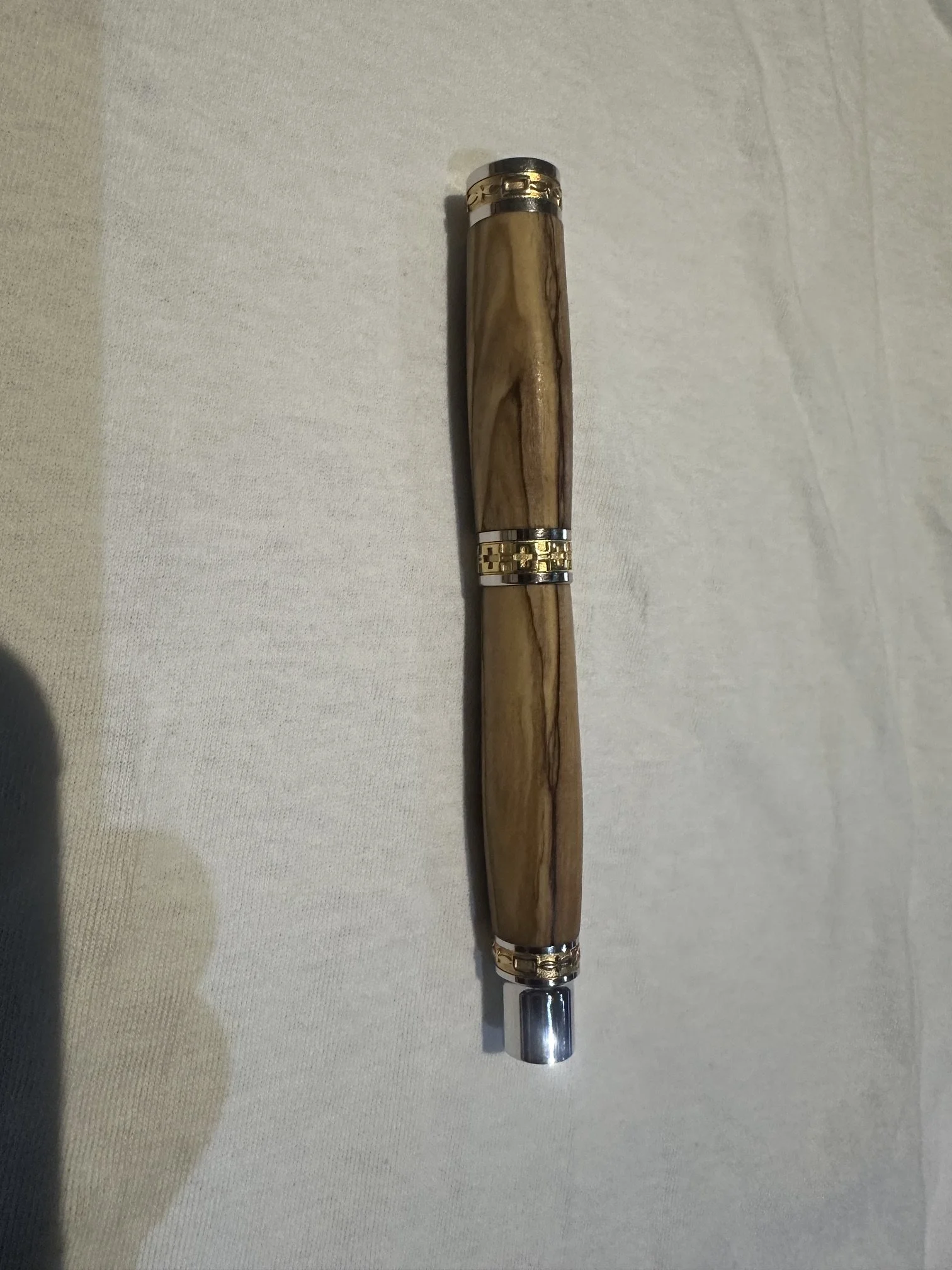
The wood does the talking.
Stock is chosen for figure and stability, then stabilized and finished to last. A selection of what's on the rack — ask about anything else.

Dense rosewood, ribbons of orange to deep brown. Polishes to glass.

A storm of eyes and swirl. The most prized burl on the bench.

Chocolate depth and tight cluster figure. The boardroom classic.

A single, uniform red that stops the room. Hard as it is bright.

Cut gray, then oxidizes to violet. The color deepens as it ages.

Pale and calm until the light catches a thousand tiny eyes.

Yellow-orange shot through with red. Loud on the shelf, quiet in hand.

Fresh-cut orange that mellows to rust. A collector's slow burn.

Golden ground under wild dark stripes. No two boards agree.

Layered automotive paint, hardened and cut like stone. Detroit's accidental gem.
Made slow, kept simple.
Hand-shaped, never machined
Each blank is rough-turned, left to settle, then finished with a gouge and skew. The shape is read off the grain as it appears.
Wax, oil, and patience
Multiple coats of food-safe oil and a hand-buffed carnauba wax. No thick plastic shell — you feel the wood, and it ages with you.
A wipe is all it asks
A soft cloth for pens; a calibrated hygrometer and distilled water for humidors. Re-wax once a year and it outlives the owner.